Last Friday, I promised to explain the marketing strategy being used by so many indie authors of making books free for a limited period of time. To many, it seems counter-intuitive that giving books away could help to sell books immediately afterward, but it actually does. There are two reasons why “free” works. The first is a classic marketing mechanism, the loss leader or free sample, which works over a longer period of time. The second, and arguably more powerful mechanism, is a result of the way books are displayed by online booksellers, particularly at Amazon, and it can give immediate results.
First, let’s talk about loss leaders and samples. If you have taken marketing courses, you know about the strategy of a loss leader – a product deeply discounted or made free to get consumers into the store, to increase their familiarity with a new product, and to drive future sales of that product or that company’s product. Once upon a time, complementary copies of books were only sent to reviewers by publishers, but with the growing popularity of blogs and review sites like Goodreads, all readers could be reviewers – and potential advocates for a given book – and so complementary physical books have become more common as a marketing tool. It has become very common for publishers to give away print copies of books – either current titles or upcoming titles – at conferences and conventions, in order to build buzz for a book.
Fifteen years ago, I’d go to a writers’ conference and come home with three or four free books – and think myself lucky! Now people pack extra suitcases for the free books they know they’ll get at these conferences, drive to the conference so they can fill the trunk of the car with books, and/or ship free books home. It is easy to go to a conference like RWA National now and collect 50 or 100 free books.
The idea is that readers will try the free book, love it, then buy additional titles by the author. This is a long term plan for building audience and it works.
But the second reason “free” works with online book sales is because of the algorithms used to calculate what book covers are displayed to customers online. This is a distinctive twist of online bookselling and, like so much on the internet, it works quickly.
Let’s start at the beginning. Once upon a time, we bought physical books in bricks-and-mortar bookstores. Those of us who were avid readers made regular trips to these bookstores – maybe supplemented by a visit to the book shelves at the grocery store or drugstore or other non-traditional outlet. By walking into the store, looking at the displays, then going to our favourite section and looking at those displays, we knew what books were newly released. We probably also knew of someone on staff at that store who had similar reading tastes to our own, or who understood our reading tastes, who could recommend “must-reads” to us. So, there were two mechanisms at work in our “discovery process”: the act of browsing and recommendations from trusted sources.
The browsing function was assisted by packaging choices made by publishers. Over the last twenty years, the art of packaging has become much more sophisticated and cover art has developed a language in itself. By investing in a strong and unique cover, with imagery that conveyed a great deal of the book’s content, genre and tone, the publisher aided in the consumer’s discovery process. We would notice books that were packaged to look like books we would want to read – and we could do it even if our trusted sources weren’t available to make recommendations.
In addition, publishers often bought premium space for certain books to be displayed more prominently in those bookstores. Front of store displays, window displays, placement on the New & Notable table, end cap display, books displayed face-out (instead of spine-out), special displays (those cardboard dumps) and books displayed in multiple copies at eye level are all paid space. Publishers paid to have books that they wanted us to notice in those positions. (Note that in recent years, as physical book sales have dropped, those spaces might not always be sold. It’s become increasingly common, for example, for the section manager at a bookstore to build an end cap display of his/her own choice, because there is no paid end cap booked.)
Then came digital bookselling and digital books. One of the big challenges for online booksellers is to replicate those two functions of discoverability – browsing and recommendations. Although there is paid space available on many online bookstore websites, there are questions about its effectiveness. You can’t guarantee the path that a reader will take through the virtual store, the way you can guarantee the path a reader must take through a physical store to (for example) the romance section. A consumer must walk through the front of the store in a bricks-and-mortar store, and it’s possible that he or she will notice books displayed there that might not have been noticed otherwise. An online consumer, though, can bookmark the section he or she wants to see and leap right there, never seeing the home page of the digital bookseller. It is as if the romance reader spontaneously manifested in the romance section, at the appropriate section for her favourite author. (And you thought only the Wyvern could do that – we all can when we shop online!)
What has become clear in the past two years is that readers like recommendations – we like to know what other readers, maybe with similar tastes to our own, are reading. We trust their recommendations, particularly the ones they make by buying books. This is perceived to be more honest and reliable than official reviews. As a result, the places that see very regular traffic – and directly impact in sales – are sites like Goodreads, and also the bestseller lists at various online booksellers.
Amazon has very specialized bestseller lists because they are aware of this buying habit. If you look at their bestseller pages – for example the one for historical romance – there are two columns, each numbered 1 – 100. The left column is paid books. The right column is free books. Each page of the list displays 20 of the top 100 titles. So, making that list even in the free column provides increased visibility for any given book and author. Getting the book higher on the list increases visibility, because many consumers will only look at the first page or two of the list – the top of the list. That’s the first visibility benefit of going free. The book’s cover image is the most prominent detail displayed on these lists, so clearly, this function will work best with a great cover.
The second visibility benefit of going free occurs after the book returns to its regular price. This again is counter-intuitive, but it’s a result of how the algorithm works. One of the ways the online bookstore tries to replicate the recommendations of the bookstore employee who reads the same kind of book as the consumer is the “Also Bought” display. You can see this on the product page for any book on Amazon: “people who bought this book also bought these books” with a display of five or six other titles. The idea is that the reader is reassured when he/she sees books already enjoyed in that list, or is encouraged to shop for even more books. In a way, it also echoes the browsing function, as the reader follows the breadcrumbs from one book’s page to another, enticed by covers, descriptions or reviews.
The key to the success of going free lies in this function. Let’s say that a book goes free and 10,000 people download the free edition. When the book comes off free and returns to its usual price, that book will be displayed in the browsing history of all 10,000 of those people, and it will be displayed along with the other books purchased by those 10,000 people, AND it will be displayed at its current price, which is not free. There is no way to see that the book ever was free, after it comes off a free promotion. The reader might assume that all of these 10,000 people paid the current price for the book.
This gives the book a tremendous boost in visibility, which ideally results in actual sales. If the book can rise on the paid bestseller list and remain there, it can continue to sell at a very healthy level – maybe for the duration. And over time, the excellent sales for that book can help to build the overall audience for that author. Readers will naturally explore all of the author’s list, if they like one book by the author. Making those online bestseller lists and remaining on them is the cornerstone of an author establishing his or her income at online booksellers like Amazon.
Mr. Math calls this effect “buying a virtual end cap”. The book gets more visibility as a result of the “free” strategy – but you “buy” the end cap with content rather than with money. I actually think that if the book can rise to the top 10 of the bestseller list in its respective market niche then it’s effectively gained front-of-store display space. Top 100 in digital overall (not within a niche) is comparable to a whole line of that book at front-of-store, eye-level, face-out. This is the new display space and interestingly enough, it’s based not on promotional dollars paid, but on sales. (This touches upon a whole ‘nuther talk we could have about what Mr. Math calls “the democratization of popular culture” but we’ll save that for another day.)
Is going free a perfect solution? No. Are there potential pitfalls? You bet. Let’s talk a bit more about some pluses and minuses tomorrow.

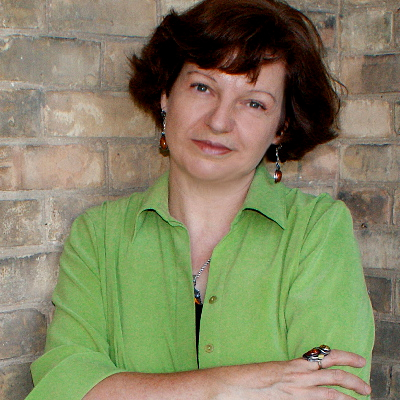
 Deborah Cooke: Author
5 responses to “Why “Free” Works”
It does work! Laurann Dohner’s first book in her New Species book, “Fury”, was free last October. I just got around to reading it in February, but I loved it so much I bought all her books in all her series (over 20), just since February! I have done this with other series as well!
LikeLike
Great post! I do think that many of us readers operate on getting a decent sample first–if we’re hooked by that, then we’re in! I have added quite a few authors to that auto-buy list after reading one excellent first book… And well, if that book happened to be free, then that means more money to spend on the rest of the backlist/upcoming releases!
LikeLike
Thanks for commenting, Fedora and Christy M.
btw, I’m going to start running some contests here on the blog again in May. There will be one for people who post reviews, starting on the first of each month, then one for everyone on the 15th of each month. Contests are fun and I miss them!
LikeLike
Deb, I also think that free books work and I also noticed several authors writing series offered the novel previous to the newest release for free.
Wow contests, you do too much for us anyway, but thank you all the same.
deb
LikeLike
LOL Deb- contests happen when I look in the book zone and realize there’s waaaaaaaaay too much in there. Rather than copies being stacked up here, they can be out there, getting read!
d
LikeLike