As most of you know, many authors not only have regained rights to their backlist titles (I wrote a post on that a while ago called Silver Linings) and are re-releasing digital editions of those works. So far, I’ve done the easy part and re-released my two novellas from the MAMMOTH anthologies – “Coven of Mercy” by Deborah Cooke and “The Ballad of Rosamunde” are both available in Kindle editions. I thought there might be people who wanted to read my novellas without buying the whole antho and it appears that there were a few of you.
I have a lot of other backlist rights back in my pocket, but it’s slow getting the files together. Since several of you have expressed an interest, let’s walk through the reasons for that:
• Digital File Survival
This is a problem with my having used Mac software over the years instead of Microsoft – one thing Mac has never done particularly well is ensure file compatibility going forward. So, the new version of a word processing application will read the last version but not the one before that. It’s pretty easy to see that if you don’t resave your back-up files with every couple of software updates, the data will become inaccessible. I never did that, because it takes time. Conventional wisdom until very recently was that rights would NEVER revert to the author, so it didn’t appear that this would be an issue.
Oops. So, the oldest titles that have reverted have to be completely retyped.
Another wrinkle here is that any digital back-ups, when they exist, are of the version of the book initially delivered to the publisher. Until very recently, the entire editorial process was conducted on hard copies. So those little tweaks and corrections made by the copy editor, the scene added for clarity, the spelling and grammar corrections – those things all have to be added to the digital file.
This raises the time investment required to create the edition for re-release.
• Time Management
Are people really going to buy re-released editions of backlist titles? Popular fiction is a mirror of popular culture, so what resonates for readers in fiction is always changing. When I look at these backlist books, they really do come from another place and time. I’m not certain that they will be compelling reads for people now, even if they were so then. And if a re-release is going to ultimately earn me $20 or something similar for hours of work, it’s not worth putting the time into creating the new edition.
• Changing Skills
One of the hardest things for me to do is to type in these old books. In a way, it’s good that I’ve learned as much as I have. In another way, rewriting the book isn’t effective in terms of cost and time. Where’s the balance? How much change makes it into a new book? How much change justifies changing the title?
If the rights were still held by a publisher, in contrast, and the publisher chose to re-release, the book would be re-released exactly as it was published the first time. No one would be agonizing over changing the order of the scenes to maximize emotional impact.
• Digital Options
As discussed previously, I’m not wild about the options available at this point in time. It would be lovely to have a digital standard for these book editions, one that people could read on any electronic reader, and a platform that made it easy for authors to put the file together. Amazon’s interface is good, but it only creates Kindle editions. No doubt this solution will come – it’s like Beta and VHS, but we’re still not clear on what format will win out.
• Frontlist Driving Backlist
One of the sayings of publishing is that frontlist drives backlist. What this means is that a new release by an author will generate interest in his or her backlist titles. I used to see this particularly with Bantam/Dell and the Bride Quest series – when a new title was coming out, the sales team would solicit orders for all of the previous titles in the series. The assumption is that there will be some readers who will want to start at the beginning, or fill the holes in their collection. Also the new title might have quite prominent display space. And on royalty statements from that house, I could see a spike in sales for backlist titles in those months which featured a new release from me – even after I was writing a different series at Warner Books.
What characterizes a lot of reverted titles is that the author brand is no longer active. There is no frontlist. I have, for example, rights back for all but one of my Claire Cross titles. The fact that there is no frontlist, though, creates a problem – what will drive interest in a re-release? What will make readers aware that they even exist?
Conclusions
Will I release digital editions of my previously published work? Sure, but it will be a slow process, given all of the above and my deadlines for new work. My focus has to be on the future instead of the past, so repairing these files will be something I do when I have a few minutes available. I think even laundry will trump it! I’m still thinking about the author branding, as well.
I’m hoping to have one novel put together soon, and will let you know when any files are live for download. In the meantime, I’ll be looking and listening for other options. If you hear of one, please let me know!

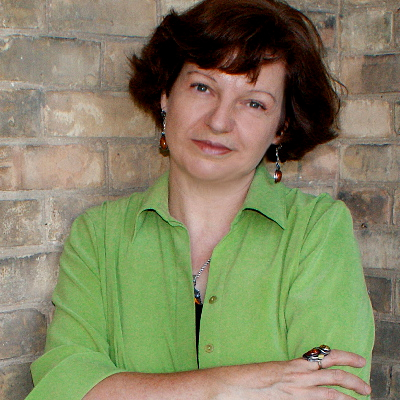
 Deborah Cooke: Author
2 responses to “The Backlist Challenge”
Personally, I would think any new book you publish would create a desire for your backlist. Any time I read and enjoy a new author, I go searching for anything else he/she wrote. I’ve also been gradually replacing all my print books with e-book copies because my house is overflowing and I imagine that I’m not the only person doing so.
Assuming you have the rights to the edited version that was published, couldn’t you just OCR a print copy of your old books? You would still need to proof the output, but I would think it would take considerably less time than retyping the manuscripts. Both Amazon and B&N have tools for self-publishing to convert your documents into e-books.
LikeLike
Yes, Lisa, I could OCR. Some of my friends have done that. I tend to use the retyping as a chance to re-edit the ms – I like doing that as I go. And I am using the job as a bit of a time filler, usually when I’m waiting on something from my editor. I’ll get there, but it’ll be a bit slow. I have used Amazon’s Kindle service for the digital release of my two novellas – as much as I’d like to use B&N’s new similar service, it’s unavailable to me as a non-US-resident.
There seem to be two schools of thought on e-books. There are people like yourself, replacing your physical libraries with digital ones, and others who are intent upon having their keepers in print format. It’s quite interesting to hear the different perspectives – I heard lots this weekend! – and to look for the patterns.
Thanks for commenting!
d
LikeLike