Mr. Math and I been watching a number of ongoing television series lately. We tend to binge-watch – we wait until a season (or more) of episodes are available on DVD, then chew through a season in a week or so. I’m starting to think that binge-watching makes us tougher critics: while the ongoing storylines are more fresh in our thoughts, this way of watching shows makes any inconsistencies more glaring. Inevitably, we never make it through the entirety of the show. At some point, we lose interest and stop watching. We never go back.
And this got me to thinking about series of linked books. We’re all going to have different reasons to stop watching a series or reading a series, but there are probably some common factors.
• Timing
Once upon a time, this was the issue with ongoing television series for me. Before we had the DVD, I rarely watched linked series on television because it just isn’t in me to remember what time a particular show is on the television each week. I forget. So, I’d always miss an episode, then lose the thread of the story. Remembering to set the VCR to tape a show is just about the same task, so I’d forget that, too. The advance of technology has made it easier for me to watch linked series.
I suspect that technology has also made it easier for many people to read linked series. It had for me. Instead of hoping that my local bookstore has the next book in the series – or all of them, back to the beginning – online shopping means I can get the whole set easily. The ability to pre-order online means that we don’t need to remember the availability date of the next title or even remember to go and buy it – it’ll just show up when it’s published. Reading digitally means the instant gratification of immediate delivery, too.
• Repetition
All series are based on the appeal of “the same but different”. There will be common elements in any linked series, whether it’s on television or a book. There will also be differences between individual books or episodes. So, the main cast of characters might continue, with the occasional guest appearance. The structure of the plot will be similar – they’ll all be mysteries, or all be romances. How much difference and how much similarity there is between episodes or books is a subjective call.
We each have our own preferences, too. I will watch Law & Order episodes forever, never mind its spin-offs. I really like the format of that show. Mr. Math made it to halfway through the second season then refused to watch anymore, because they were “too much the same”. This is true of linked books, too – he prefers one big book with all of the plot elements wrapped up by the end, or one big movie with everything wrapped up by the end. He will read another book by the same author, just not a linked series. He hates cliffhangers, while I think they’re an interesting storytelling technique.
• Poor Research
This can make me chuck a book at the wall or turn off the DVD. I expect writers and scriptwriters to do their homework. I do mine. I don’t consider myself an expert in many things (knitting seldom features in television shows) but when my area of knowledge is misrepresented, I move on to other entertainment options. In NCIS, McGee’s career as a fiction writer bears no resemblance to anything I’ve experienced in publishing. After the publication of one book (which apparently happened instantly in hard cover). he bought a Porsche and everybody recognized him from his author photo. The episode in which he is stalked by a fan is odd – he calls the woman to whom he sends his work “his publisher”, but she talks about “her agency” – is she is agent, his editor or his publisher? Maybe she’s his publicist, given her choices. No matter which way it goes, it’s very improbable that her assistant also drives a Porsche. In New York? An assistant? Hmm, no, not in the publishing world I know.
• Characterization
This is the big deal-breaker for me. I can’t handle characters who act out-of-character. In ongoing television series, this sometimes happens because the actor playing the character hasn’t renewed his or her contract. The character has to be written out of the script, and I’ll guess by how abruptly these story threads can develop, there isn’t always a lot of notice. One other pattern I’ve been noticing in television shows is characters keeping secrets. Think of Kono in Hawaii Five-O, after she loses her badge. She pretends to turn bad, everyone on the team believes she has gone bad, but in the end, it’s revealed that she’d been part of a covert operation to catch the bad cops. So, there’s a big plot twist and surprise, but the problem is that I ended up really disappointed in the rest of the team for their lack of perception and faith. While their lack of doubt reinforces the surprise of the plot twist, the problem is that viewers like me might stop watching before the revelation.
This is a risk in linked books, too, I’d think. Any reader could have a fondness for a secondary character and be waiting for that character to have his or her own book. If the character acts oddly, the reader could lose faith with the series. But the intimacy with the reader provided by books usually means that there are hints and clues scattered through the text. Sometime we don’t notice those hints or brush them off, but when all is revealed, we have an AHA! moment. I love AHA! moments. Television doesn’t lend itself well to this kind of breadcrumb scattering, given the pacing and tight schedule. We’re more likely to see these kinds of hints in a movie.
So, how about you? What makes you lose interest in a series of linked books or a television series? Do you think the way that you watch or read them (in increments or by binge-ing) affects your decisions? Do you like cliffhangers or not?

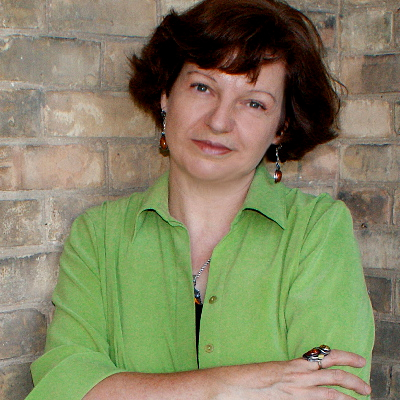
 Deborah Cooke: Author
4 responses to “Losing Interest”
I don’t like it when a dead parent suddenly comes back to life after being dead for a number of years, And everybody’s ok with it. If I was a child of said parent I would be ticked. That why I stopped watching “Revoluttion”, when the daughter just accepted the fact the her mother was alive. And didn’t question anything about the it, you lost me.
LikeLike
Interesting point, Victoria. I’m all right with people not-really-being-dead in historicals or in paranormal stories, because more things are possible. In historical periods, there might not have been the same checks and balances – everyone said he was dead as opposed to the city morgue creating a death certificate – and in paranormals, anything goes. In contemporaries, though, especially police procedurals, I get vexed about dead people not really being dead.
If dead people aren’t dead, then yes, the live people should have lots of questions!
LikeLike
While I like tv series with an interesting story arc, as well as cliffhangers, I don’t keep up with shows like I used to, unless the episodes are online.
With book series, my two biggest deal-breakers are lack of continuity and bad (or complete lack of) character development.
For example, I once started a series in which the birth order of the family’s children changed in the second book. To me, that and other continuity problems, are a lack of respect by the author, not only for the readers, but for her own work, and I doubt I’ll ever read anything else by that author.
When it works, series formulas can be like the comfort food of reading, but too often they seem to be just recycled plots, as if the writers have lost all inspiration and are just cranking them out.
The same goes for some tv series that should have ended while they were still good.
If the characters do not grow at all, or start out interesting and become unlikeable, I won’t care enough about what happens to them to keep reading or watching.
LikeLike
I think we’re thinking the same way, Rachel. There’s a balance to be struck between the story delivering what is expecting (maybe with a twist or two) and the story being too far out there and looking sloppy as a result.
LikeLike