Last week on Wild West Thursday, there was a comment about authors finishing series of linked books but not taking too long about it. That got me to thinking about publication schedules. Authors have never been able to write as quickly as readers can read, but expectations in terms of publishing schedules are changing for a couple of reasons.
Once upon a time, when I sold my first book, it was the norm for authors to have a new book published every 9 to 12 months. It was believed by publishing professionals that more frequent publication would only “cannibalize” the author’s sales, i.e. that readers would decide between book #1 and book #2 instead of buying both. (And yes, I love the choice of verb.) This was an issue for me, because I write more quickly than that and I wanted to place all the work that I wrote, to more quickly build my author brand.
This one-per-year publication schedule is still the expectation in many niches of the book market, but not so in romance. That’s probably because of category romance publishers like Harlequin, who recognized early that their market was one of voracious readers. When I sold to Harlequin Historicals in 1992, they already believed that any author’s audience could support the publication of two books per year, or a book every 6 months. (That’s part of the reason I wanted to sell to them.) They were starting to question whether they could publish more or not – I was the first author in the Historicals program given 4 publication slots in one year (1994) and that worked out just fine.
Subsequently, single title publishers became more aggressive with release schedules. It became more common for authors to have a release every 8 months, or to have a cluster of releases – perhaps an entire trilogy, one per month, for three months in a row. This worked well in many cases from a reader perspective. The problem was often one of supply – if the author wrote an entire trilogy for publication then did a few months of intense promotion, there could be a long delay before her next book was published simply because she didn’t have the time or energy to write it. There’s a sense that the energy generated by the aggressive push was lost, particularly if the next book was published a year or more later. Here we see the need to strike a balance between the author’s productivity, allowing for the time required by the publisher’s production cycle and the distribution of print books, and the reader’s enthusiasm for the work.
By the time I sold to NAL in 2006, the pattern of publishing books at 6 month intervals to launch a series, then 8 month intervals after that was pretty well established as a workable balance. This might have continued to be the pattern, if there hadn’t been a number of additional changes:
• the abandonment of series before they were completed.
We tend to like shiny new things, and publishers are no different. There’s always been a tendency to get excited about publishing a debut author rather than to work to build the sales of an author already with the house but not yet bestselling. With the shrinking of the book market in recent years, publishers have shown an even greater tendency than before to abandon series before their completion, either parting ways with the author or publishing something new and different from that author. Although we can all understand the impetus – and the idea that the new series might sell far better than the existing one – this strategy doesn’t do much to build goodwill with readers. It’s my sense that there are more readers unwilling to commit to reading a series at all before every single installment has been published.
• the digital re-publication of many backlist series means we can binge-read.
In recent years, many authors have had the ability to republish their backlist titles. Because these books were essentially written already, the publication schedule could be sped up. Frequently all titles are released simultaneously in new editions – this is, for example, what I’ll be doing with my Prometheus Project trilogy of urban fantasy romances. All three backlist books will be re-released almost simultaneously with the new fourth title in October 2013. I also did this last summer with the four books in the Coxwell Series. When such a series is new to you as a reader, you can binge-read. You can chew through the whole series in a week or less. Even though we know that it took longer than a week to write four books, our expectation is skewed by the aggressive publication schedule.
• digital publishing feels more immediate.
Because digital books aren’t printed and distributed, and because digital content can be delivered over the internet in the blink of an eye, we have a sense that digital publishing is not just fast but much faster than print publishing. The traditional year allocated to the editing and production of print books seems like an eternity. There is a growing sense – which isn’t entirely justified – that any delay in publishing books (especially linked books) is a contrivance and thus unnecessary. We want our linked books and we want them now.
So, what does all of this mean for authors? Once again, we’re running up against the very real constraint of how long it takes a given author to write a book. There are still some time allowances required for editing, formatting, etc., but I think there will be a new norm developing that is less than a year in duration. I believe that with indie-publishing an author’s release schedule will be primarily determined by his or her productivity, not by some fixed idea held by a publisher about the size (and voracity) of that author’s market. That means that some authors will publish very frequently and others less so. We’re going to see this settle out over the next couple of years as authors find their sea-legs, so to speak, and figure out what we can realistically do. To be without constraints is both exciting and daunting, but I’m enjoying the challenge.
How about you? Do you binge read on linked series? Do you wait for the whole series to be published before you start to read? If you read linked books as they’re released, how long do you think is “too long” to wait between books? Has that changed in the last five years?

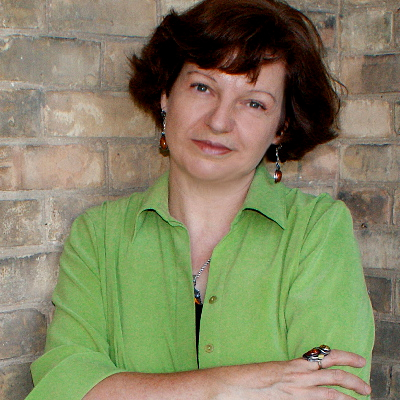
 Deborah Cooke: Author
7 responses to “Timing is Everything”
Interesting thoughts Deb, I recently interviewed another author friend of mine also established like you whose gone the route of self publishing. I can’t wait to see how she answers my question of why. I even mentioned you not by name to her but that I knew other established authors who are choosing this publishing road. I think you could get as many answers as authors to ask why. I know authors who’re left behind by their publishers, I know authors who want to have more control about content and now also the timing issue.
thanks
deb
LikeLike
There are dozens of reasons why, Deb. The cool thing, IMO, is that there are more options open to authors – we can each create a custom publishing package, one that suits our needs and our work best. That’s a wonderful change.
Wait for next week’s post. It’s a comparison between traditional publishing and indie for digital books, and one that is pretty interesting, at least to me.
LikeLike
I can say I binge-read on new series/authors that I come across. Recently I’ve just read a trilogy and novella from a new author I found in just over a week. Now that author has nothing foreseeable on the horizon in upcoming books which is very annoying!!!
Your thoughts give great insight to readers about the whole process of publishing and the time frames that take place.
LikeLike
That’s exactly what I mean, Ang! I do the same with television shows – we buy the whole season of something like Downton Abbey, binge-watch it, then have to wait another year for more. Boo. 😦
LikeLike
I’ve been binge reading your work for the past 2-3weeks! I am anxiously awaiting “The Highlander’s Curse”
LikeLike
Thanks Kellie! I’m glad you’re enjoying my books. (Good thing there are lots, since I’m running late on Annelise’s book.)
LikeLike
Yep I do with TV shows also, I binged watched two season’s of Game of Thrones in a weekend. I was on Information Overload by the end of it!! And I can now say “Winter is Coming” (we just hit Autumn here in OZ lol)
LikeLike