This is a pondering post, and I welcome your comments on it. It’s about something that has confused me for a long time, and maybe some of you have some ideas that will clarify the issue for me.
One of the things I always want to do with linked books is have continuing story threads. I like to have an arc over the series, which comes together and culminates at the end. And when I have a lot of characters, I’d like each to have a little cameo in each book, so that we get updated on what they’re doing at this point in time. This kind of storytelling enriches the world of the books, IMO, and also makes all of the characters more rounded – each one has his or her character arc this way, not just the protagonist. This kind of storytelling makes the fictional world seem more dimensional and real to me.
If you watch television series, you’ll frequently see this kind of storytelling. For example, right now, I’m watching the first season of the new Hawai`i Five-O. Without too many spoilers, the pilot for the series shows Steve McGarrett’s father being murdered, supposedly in exchange for the release of a criminal being transported through Asia by Steve (who is a Navy SEAL). Things become murky though – Steve learns later that his dad (a cop) was working on a cold case and resolves to finish what his father had begun. So, sprinkled through the first season are references to this ongoing story – in one episode, Steve’s sister finds the father’s collection of evidence and photographs it all. In another, Steve asks for help from Chin Ho. In every second or third episode, there is a single scene referring to this overall story. It’s not resolved. It simply stands alone. And it’s usually short. Of course, as we get closer to the end of the first season, the threads begin to be woven more densely. There are other continuing plot threads as well – like Chin Ho having been accused of corruption, and Danny’s divorce – at least some of which will probably pull together in the culmination of the first season.
I like this structure a lot. It helps to keep continuing series from being episodic and their stories from seeming repetitive.
There is an idea in publishing, though, that individual books in a series have to stand alone. And the interpretation of this is that there cannot really be any continuing plot threads – other than, say, the battle against evil. The fear is that new readers will pick up some book further along in the series and not understand what’s going on – I suppose the parallel would be catching episode 7 of a given season of a television show and not understanding those scenes that relate to the ongoing story threads. While I can understand this impulse, I also want to include those plot threads.
As a reader, when I pick up book #5 in a series (often because the current title is the only one racked in my local bookstore), I assume there’s going to be stuff I don’t understand based on what’s happened in the previous four books – if I still enjoy the story, I’ll go back to the beginning and read them all. Other readers I know will only begin at the beginning, for the same reason.
Obviously there’s a balance point to be found, between weaving in those continuing stories and ensuring that each book can be enjoyed alone. And it is true that whenever I manage to include more than one scene from any continuing plot thread, there will be several readers or reviewers who complain.
What do you think of continuing plot threads? Do you think books are that different from television shows? Where’s your balance point between continuing plot threads and books that stand alone? And how do you read linked series – from the beginning? Or with the assumption that if you don’t start at the beginning, you won’t follow every little thing?
Edited to add – expectations may also be a reflection of genre. In romance, for example, the expectation is that the story will be that of the developing relationship, and that the two characters in the spotlight will be the hero and heroine. Including scenes from the POV of other characters will naturally diffuse the focus and might even slow the pacing. So, I have another question – does your expectation change based on the genre of the story or books that you’re reading?

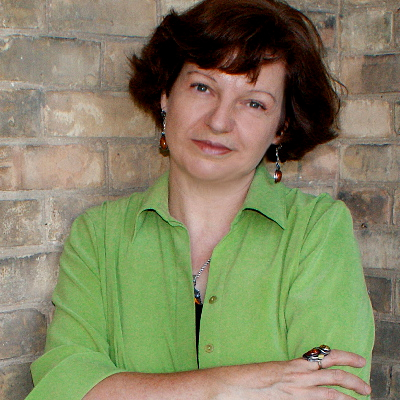
 Deborah Cooke: Author
7 responses to “Books Standing Alone”
Good point! I think the visual medium of TV allows for the quick scene referring to other plot threads easier than books do. That 1-2 minutes of TV time translate to several book pages, and while the series reader settles in for a good read, the “new” reader scratches her head in confusion.
My theory is that the author needs to make the scene(s) for the on-going plot threads blend with the current plot story; they have to do double duty. Harder for the author, but easier for the reader.
My big problem with series is the small cameos/updates of the other characters. When the series becomes so big that the cameos take up too much story space. (I’m thinking Suz Brockmann’s Seal Team 10 series.) When the primary story is too short (or convienent) because of the rest of the character’s updates, I feel cheated.
Make sense?
LikeLike
That does make sense, Pam. I do think it’s a question of balance.
Hey, maybe books in linked series should be longer!
d
LikeLike
Do you realize how difficult it is to FIND a book that isn’t in a linked series anymore? I was staring at the local bookstore’s shelves and walked away shaking my head. Almost all of the new releases are series, and I realized I don’t have time to start any new series.
LikeLike
I love series books myself. Usually I’ll start with the first one &, if I like it, then I’ll continue on. If I start with a book in the middle & like it then I’ll go back & start at the beginning as well.
I love how a series allows the reader to see how a couple is doing from a previous book, for example, or how the family/friend dynamics can enhance the current book & the others in the series. I agree there is a balance as to how much backstory that should be filled in though. One author I read (I can’t recall who it was) had a few pages of backstory in later books & it was too much. A paragraph or two here & there, especially when it is relevant to the current book, is fine with me & I can skim over it briefly if I don’t want to read that portion..
As far as television series goes, I enjoy a continuing storyline. However, having watched several excellent series that were cancelled after one or two seasons, I’m hesitant to watch it unless I know how long it’s going to last (or has lasted). I hate getting involved with the storyline & characters & then to have them disappear!
Good point regarding the genre but, I think my expectations adjust per the book or series. Usually I’ll get a feel if something has the potential to continue or not. If so I’ll check for other books or plans for them. I have two sons & read a lot of juvenile fiction with them & we have enjoyed some incredible individual books & series equally.
I can understand the frustration, Pam, if you’re only looking for a single book though. I usually check it out online before I buy one & can find out which of an author’s books are part of a series & which are not.
LikeLike
I think each book in a series should have a specific story that begins and resolves within that book. BUT I also think the over-arcing background story for the series keeps me interested in reading all the books, not just the one. Just from a financial standpoint I think a series sells more books for the publisher than any stand alone book.
LikeLike
Nothing like deep thought to start off the day 🙂
I love series, mainly because I’m usually not ready to let a character go at the end of his/her story so the cameos to keep me posted really help. But and this is a big but, different series have to be treated differently, a series where the previous stars are only peripherally involved don’t warrant anything but that small snippet of information about them. Your series however Deb involves all the dragon guys or most of them in each and every story so in my humble opinion they have to have more than a cameo appearance in stories that are not their own. I think you do a marvelous job featuring the guy who’s firestorm is dawning while keeping the others close at hand and yet not always front and center.
Therefore I think that statement is too general for all series and it’s a testament to your following that you’re doing a great job.
Happy Holidays to you
Deb
LikeLike
Thanks everyone for your comments here. You’ve given me lots to think about!
I wonder, Pam, whether your observation about everything being part of a series has something to do with the changes in publishing. I’ve heard one publisher say this fall that they don’t promote first books – i.e. the first book by an author – and she mentioned that another publisher had said the same thing when they were on a panel together. So, it makes more sense – both for authors and publishers – to publish books at least in linked trilogies, so subsequent books will be more likely to boost the sales of the first one.
The other thing, of course, is that linked series clearly work, so everyone is doing them. Someone is going to write a humungous standalone book that astonishes everyone with its sales, then that will become the new model for success. The only constant in publishing is change!
And hello Debbie O! Thanks so much for commenting.
d
LikeLike