Someone made a comment to me at WotS on Sunday which has been rattling around in my mind ever since. The comment was to the effect that some authors write too many books per year in order to ensure their income, and that they might be better off writing fewer books and doing a better job with each one. I won’t specify who said it, partly because I’ll be paraphrasing, and partly because the idea is comparatively prevalent in some writing circles. Also, in this particular case, we were talking about scheduling in quite a reasonable manner – but there are several assumptions piled into this suggestion.
Let’s look a little more closely at the idea of creating books on a schedule.
Books are not widgets.
If you make widgets, it doesn’t much matter what they are. Once you have an acceptable prototype, you can design a production cycle, tool up and start making widgets in volume. You can calculate how much material and labour cost goes into each individual widget. You can time how long it takes to make each widget. You can allocate an appropriate increment of your development and overhead costs to each widget. You can do these things because each widget is identical to its fellow widgets. They are indistinguishable from each other. If they are good widgets, after you do quality control, they will all be good widgets.
But that analogy doesn’t work for books, at least at the writers’ end of things. Not only is every book different from every other book – and this includes even the various books of a single author – the definition of what makes a good book is subjective.
In contrast, the production phase of a manuscript becoming a book is more like making widgets. Publishers have a pretty firm idea of how long it will take to copy edit a book, to format it, to proof it, to print it, to distribute it, etc. These phases are mostly invisible to the author, so have little to do with the allocation of the author’s time. The squishy bit is our department.
The problem is that out there in the world of publishing, books are products. At some point, the squishy part of creating the book has to mesh with the widget-making bit of printing and distributing it. And since writers do the squishy bit, we usually get to decide – or at least contribute to the decision – of delivery dates on book manuscripts.
Let’s look some more at the squish and its challenges.
1. Individual Books are Unique.
The process of any given writer creating any given book is variable, sometimes wildly variable. This can be dependent upon the idea itself. A new idea might require a ton of research, learning a new technique, reconsidering structure, or just a whole lot of mulling time. When an author changes genres or subgenres, there can be a learning curve. Some stories are Just more complex. Some are more subtle. Some ideas fight every step of the way and every sentence on the page is hard-earned. On the other hand, some ideas fall out of your fingertips, like the Book Fairy buried them in your memory during the night.
This process can also be influenced by the writer in question. Sometimes, you have a lot on your plate in real life and it’s harder to work out the plot kinks in your fiction. Sometimes, you can step away from the world and its demands and write like the wind. Sometimes you write a lot of stuff that you end up chucking out – it might be the wrong passage for the work in question. Sometimes every sentence is golden and on-target.
In my experience, a writer’s level of production is always in flux because it is subject to so many other influences. I have written books in 60 days. I have written books in three years. I doubt that any of you could tell which was which.
That books are different is a good thing. In a way, it’s the point of fiction. If all books were the same, interchangeable and indistinguishable from each other, writing wouldn’t be much of an art form and there would be no publishing industry. I don’t want to live in that world, do you? I like each book being an adventure of its own.
2. A “Good Book” is a Subjective Call.
Not only do ideas vary in how long they take to grow into books, but there’s no objective measure of whether the result is “good”. In essence, when a person says “this book is good”, what he or she is really saying is “I like this book” – which is not quite the same thing.
An editor might adore a book just the way it was delivered. An editor might decide that the idea she loved in synopsis really didn’t come together in this version of the book. Some books go through many (many) revisions before publication. Some have two typos corrected and away they go to production. As a writer, you can’t plan the length of this phase, because the editor doesn’t know what her reaction will be until she has the first delivered manuscript. There’s another squishy phase to schedule – and we writers are the ones who need to pull it together.
Similarly, readers make subjective calls as to what books they think are good. This is why handselling always worked so well for fiction – “if you liked Book A, then you’ll like Book B” – and why websites like Goodreads are so popular. Review sites work best when the reviewers are listed on their reviews – because I might agree with one of the publication’s reviewers but not the others. If I know who wrote which review, I’ll know which glowing review is the one that matters to me. (As an aside, there was an interesting survey published online recently about buying habits – no surprise that many ebook readers shop based on the recommendations of people who share their reading tastes, or shop by author. Here’s the linky.) This is why no one really knows how well a book will sell until it is out in the marketplace. Will people decide it’s “good” or not? Sometimes the choices of the readers of the world are as anticipated. Sometimes they’re not. (I actually like that bit of unpredictability. It appeals to my inner anarchist. You know you have one, too.)
And this is why you can’t decide in advance which books an author should write – particularly before they’re written – or publish. They’re all different. “Good” is a subjective call. So, the suggestion that an author who published three books in a year should have only published two and “made them better” is really an unfair call on several fronts. Who’s to say what specifically would make them better? Who’s to say which one was the least “good”? Who’s to say how popular or important or creatively significant each one of those books were?
Some people might suggest that the money is the measure, but I’d disagree. Market response is not linear, based on either the author’s or the editor’s opinions. Lots of books underperform in the marketplace, even though I think they’re brilliant. Although I love all of my books, there are several that stand out for me as being stronger creative work or stories that resonate more for me personally. They may or may not be my bestselling titles. There’s no correlation between my view of their relevance or “good” and their sales volumes. Each one was the next step on my creative journey and helped lead to its successor. I did my best with each book’s particular challenges given my skill level at that point in time, working with my editor to make it the strongest work it could be.
I could revise every single book in my backlist and make it stronger – or different – but that’s another issue altogether. I also could go through all my rejected ideas, proposals, partials and books, and revise them into stronger stories. I believe that’s how it should be. I suspect that’s true of every author and every title, published or not. Why? Because if I thought that I could make no improvement upon my first book, published in 1993, then I wouldn’t have learned a thing in 19 years. Not one thing about storytelling or writing or reader expectation. That would be pretty sad, don’t you think?
Books aren’t widgets, and that’s a good good thing.
If you’re a writer, tell me about your experience in writing books. Are they all the same? All different? Which ones take longer? If you’re a reader, let’s play with those survey results – how do you decide what books to buy?

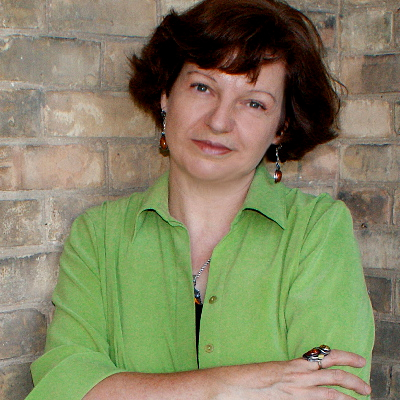
 Deborah Cooke: Author
10 responses to “Widgets and Books”
great topic today! Most of my books have been written fairly quickly, although I’ve slowed down as I’ve learned more craft. That’s a good thing. On the other hand, I’ve just (finally) finished the first draft of a tale I started 5 years ago. Lots of life intrusions, a couple other completed books and false starts later it’s a much better book than it would have been originally.
I also made the decision to not go back and rework my older titles as I put them up as independent ebooks. Although I have made some minor changes of things that made my teeth hurt. 🙂 I think sometimes an author just has to let go of their stories–there’s always something to change, improve, redo. And heck, every writer has a first book…and grows from there!
LikeLike
You’re absolutely right, *lizzie. There’s a point at which we have to let go of our works and let them be what they are. Then we can move on to new challenges.
I’ve made the same choice, btw, to not revise my backlist titles for re-release. Most of them are pretty clean and I’m happy with them. There’s one that I thought I could tweak, but I quickly realized that the only way I’ll repub it is if I have time to completely rewrite it. I suspect that’s because it’s my first shapeshifter romance, so I’ve learned a lot about telling those kinds of stories since then. Even so, I’m not sure it’s worth the effort. I’ve told that story already! For now, I’m leaving THE MAGICIAN’S QUEST out of print and writing other new ideas. One day, I might change my mind.
d
LikeLike
What a timely topic because I was debating whether or not to revise first stories as they come out of contract! Should I make them sexier to appeal to more people? Should I tweak this or tweak that?
But I also think… some folks (including my publisher) liked the story as is, and revisions take away precious writing time from future stories.
Deb, do you have any concerns that readers, since the internet is forever, won’t know these are your older stories and expect the same style or skill level as you have in your more recent works?
LikeLike
No, Kimber, I don’t worry about that. I think it’s pretty obvious that they’re my older books, and suspect that many people are following the links in from my website and FB page. There’s also the copyright notice on the second page! In fact, many readers have told me that they’re rebuying the books, because they don’t have the print copies anymore and want to read them again.
d
LikeLike
I should probably say that if I heavily revised a backlist title for re-release, I’d change the title. That’s what publishers and authors do in print, and I think it’s a good signal to readers that it’s not the same book.
d
LikeLike
Great post. Giving me lots to think about!
LikeLike
Deb, you are so right about everything. Every one of my books has a different ‘character’ while I am writing it. Some flow, but with others it’s like pulling teeth. I have a great supportive relationship with my editor–lots of respect on both sides–and I know the books will feel really solid to me by the time I’ve finished revisions, but some book…
To say that a book that is written slowly will be a better book is so misguided. If a book is dying to be written and you just have to get those words on paper NOW, and it flows out of you, chances are your passion will shine through, despite having taken a short while to write.
As well, I think it is part of human nature to take as long to complete a project as we are given. In other words, if we, or the publisher, or the marketplace give us six months to write the next book, chances are we won’t rush to finish it in four. If, for some reason, we are allowed only four months, we will do it in four.
OTOH, Deb, what is your take on how quickly readers want to see authors release new books? I read a comment the other day from a reader about how much she is looking forward to seeing most books self-published in the future, so there won’t be a publisher holding the books ‘hostage’ for a year before publishing. Perhaps she meant the traditional time lapse between hard cover and paperback release, but she didn’t say, so I can only speculate. My first thought, though, was…but we need time to write these books. Some readers don’t want to wait as long as it takes, but we writers need to take as long as we must. If that’s four months for some authors, but a year for others, then that’s as long as it takes.
Writers don’t live in a vacuum. We are buffeted by every change in the markeplace, by every demand, even when they are contradictory. So while some readers are exhorting us to write slowly and therefore (they assume) better, others are saying, “When can we have the next book, pretty please? How soon?”
Thanks for the great post, Deb!
LikeLike
Hi Mary –
Thanks for the thoughtful comment!
As for readers, well, I suspect they would like books to appear as quickly as they want to read them. I often hear from readers the very day that they buy the next Dragonfire book, for example, that they’ve read it already and want the next one. No one can write a book in a day! Once upon a time, people were content to wait a year between linked books – or more – because that was the the reality of publishing. Now, there are a lot of linked books released in more rapid succession than authors write them, which messes a bit with the conception of time. If an author has back to back to back releases (Jan, Feb, Mar, for example) chances are pretty good that each book took more than a month to write and that there will be a gap then of maybe a year before that author’s next book comes out.
I suspect that reader’s comment about a year was in reference to the one year production cycle typical at traditional publishing houses – although that’s not universally the case anymore. That time period also is a necessary part of preparing the book for publication, as the editorial process is included in that year. So, even if authors self-published, books would still be released on a schedule that coordinated with that particular author’s productivity.
d
LikeLike
Excellent points, Deb. Especially the one about a good book not necessarily equaling a better financial return. After 35 years of corporate life where hard work generally meant a raise, a bonus, a promotion, it’s hard to get my head around how that isn’t necessarily the case in publishing.
I was thinking, in particular, of an online pal who said she actually thought she could write a “better book” (to her own standards) if she had more time, but she’d become locked into a set number of books a year in order to pay the rent. She wished she could take the risk that a slower written book would mean a better book which would mean more money (or even the same amount of money as she was earning now). She had hopes of a “breakout novel” but didn’t feel her writing schedule was promoting this.
But of course, there’s no guarantee that even if she did take the risk, that it would actually be a financial success, or even a “better book” to her own mind.
Facing the future as I am, I ponder these things. ;-D
Thanks for an excellent post. And Ecuadorian chicken on the lawn. ;-D
~ Gina
LikeLike
Gina – I think it’s easy for writers (well, anyone really) that they could accomplish X Y and even Z with more time. And we do tend to believe that the Big Book (or breakout book) needs to have some big sacred block of time allocated to it, or else it won’t get written. As Mary noted, though, when I have more time, I take more time to do what I need to do. My mom always says that if you want something done, ask someone who’s busy to do it, and there’s truth in that.
What we forget is that most – or at least many – of us wrote our first book while working full time, so we were burning the midnight oil to write that breakout book. Why can’t new, bigger books be written the same way, if writing full time on contract is our “day job”? We writers never think of it that way, and I wonder why.
The Ecuadorian ladies were right – their chicken was excellent. All around a great day. Thanks so much for working so hard to organize TRW’s booth there.
d
LikeLike