We watched a movie last weekend which got me to thinking. It was a foreign film, English title MOSTLY MARTHA, in German with English subtitles. The story is of the precocious-child-thaws-icy-heart-of-single-perfectionist-making-life-and-love-possible – the protagonist is a chef in a very chichi restaurant. (The shots of food were gorgeous, btw. Eat before you watch it.)
What was interesting about this movie was the depiction of the turning point in the protagonist’s emotional journey. Increasingly, in commercial fiction – and this was a commercial movie, a romantic comedy, so the comparison is reasonable – big choices by the characters have to be explicitly spelled out. Such decisions must be shown, and often also told, for the sake of emphasis. “I’m finally going to do X,” declares the character, grabs her coat and marches off to do it. We don’t anyone to miss the big turning point, apparently. There’s very little left to implication and what is implied will almost never be key plot points.
But in this movie, they did exactly the opposite. What was happening in terms of motivation was that the protagonist decided to act differently than was her habit, then did act decisively, and that changed the outcome of the story. She essentially made her H.E.A. happen. That’s pretty much what you’d expect in this kind of movie – you’re watching the kid erode her defenses steadily, and there will be a tipping point.
In a book, this decision would usually be depicted as her realizing this – perhaps explained in a passage of introspection “That was when I knew I had to make a change…” – then acting upon it – leaving, telling character B what has to be done perhaps, and following through. In this movie, however, there was no introspection or voice-over. She simply straightened and left, looking purposeful. The viewer had no idea why or where she was going. She went to character B and said simply “I need your help” without more explanation. The two set off, again leaving the viewer with no clear sense of their mission. It wasn’t until the subsequent scene – two scenes AFTER the realization and decision to act – when we found out what was happening – she asked character B if he thought her plan would work.
I found this really interesting. There was no slowing of the pace or loss of interest on my part – in fact, I found myself wondering what exactly she would do. And in way, it felt more lifelike – so few of us do voiceovers for big decisions. (Or if I do, I’m not telling!) In addition, the fact that the decision was so understated – or its presentation was – made the climax that much more emphatic. The scenes were also very short and quick, which probably contributed to its effectiveness.
What do you think? Do you like having everything spelled out in terms of the character’s emotional journey? Or are you prepared to go with the flow for a few scenes, to see where the plot’s going? Or does it depend upon how much you like the characters? Tell me what you think!

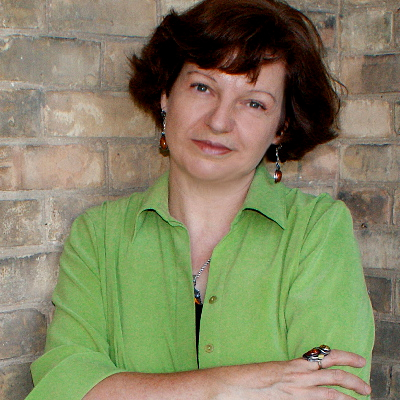
 Deborah Cooke: Author
6 responses to “Storytelling Techniques”
Deb, It sound like a great movie. I don’t have to have every part of the plot told out to me, I do like to envision somethings, but, and this is a big but for me. I do NOT like to be left hanging at the end, and I don’t mind a gentle persuasion or hint at the ending I can figure that out, but what I find frustrating is the author who wants us to end his/her story. I want to know how the story ends. Of course it’s different if it’s a cliff hanger for the next installment of a series, that I can handle, in fact it makes me pre-order the next book so I can have it in my hot little hands as soon as it’s off the presses.
Thanks for the article
Deb
LikeLike
You’re right Deb – I hate cliffhanger endings too. They feel like a cheat to get me to buy the next book.
OTOH, if there’s a thread left unresolved – not the main plot, but a smaller detail – and the hint that it will be done in the next book, I’m all over that. Those are often character issues and relationship questions, as opposed to resolving the core conflict of the plot. That’s probably the difference. If we start with a murder and the book is a mystery, I want that murder solved by the end of the book, no cheating or teasing by the author that I’ll find out in the sequel!
Deb
LikeLike
You mean I am NOT suppose to be narrating (voice overs) my life as I go…. what is that voice in my head??????
LikeLike
LOL Alicia!
I hope you finally got that ARC…
d
LikeLike
Actually, it’s never showed up. But The Pam tells me it part of poor border services… no worries
LikeLike
That’s awful, Alicia! I’m sorry.
I’ll send you a copy of the real book instead. I don’t have any more ARC’s – you probably won’t be disappointed to not have the typos!
d
LikeLike