Well, I’m chewing through that T.B.R. pile and getting through all the things I think I should read. As is usually the case with such missions, I’m not liking the reads much.
But, on the upside, I have a new Theory.
I picked up a bunch of “gentle reads” after hearing that term at National last summer, mostly because I didn’t understand what it meant. This is supposed to be a big market trend, so it’s always good to understand what people are talking about. In this particular case, I doubt that I’ll ever be marketed under the banner of this trend.
My tentative conclusions are that this kind of book is supposed to be soothing, not stressful, a nice escape from the hurly-burly of every day. That sounds reasonable, and it made me think of cozy mysteries – I had in my head that gentle reads would be Agatha Christie novels, especially the ones featuring Miss Marple. And maybe those would count as backlist gentle reads, but the frontlist is something different.
After reading a number of them – I can’t give you authors and titles, because I didn’t like them and dissing actually authors and books just isn’t my style. Let’s keep it vague – I noted a number of common factors. What’s really interesting about these common variables is that they are in direct opposition with everything that anyone has ever said about writing compelling fiction.
1/ Avoidance of Conflict
I talked a bit about this last week. A book needs a conflict, because a plot is very often concerned with resolving the conflict. That’s the point. That’s why you read the book. For example, two people at odds are compelled to marry and create an heir. A murderer is killing young woman in a quiet town and must be stopped.
But these reads don’t do that.
Some of these books hang their plot on a nice juicy “high concept” conflict – the thing is that the author never gets around to exploring the conflict or resolving it. This can make them episodic.
Some of these books deflate the conflict – for example, the protagonist declares that she killed her little brother Bobby, and it turns out that she blames herself for Bobby’s death because she didn’t remind him to wear his hat on his way to school, he caught a cold which developed into pneumonia and he died. There is no court in the world that would convict this protagonist of murder. An alternative is the protagonist dreading a confession to another character – maybe telling a parent that he/she is gay – and having the other character (who should within the bounds of all reason have an issue with this confession) declare that he/she has known all along and it’s no big deal. Often this is coupled with a declaration of love solving all issues, blah blah blah, and comes across as implausible.
The third option is that the book has no conflict at all.
Which makes me wonder why the heck anyone would read it, much less publish it.
2/ Non-Linear Chronology
A non-linear chronology is not a problem in itself. Some books are very clever about chronology, about bringing things back full circle or revealing details in inverse order, but commercial fiction very frequently has a linear chronology. Authors wrestle with the presentation of backstory, with the gracelessness of flashbacks and the only-slightly-better technique of dreams. A linear chronology – i.e. that events are presented in the order in which they occur – is probably the most common structure in fiction, because it ensures that the reader can concentrate on the story and the characters. There’s no confusion about what happens when.
When an author completely surrenders any pretence of maintaining a chronology, the book becomes hard to follow. If a scene begins with Josie walking into a store, being assaulted by the perfume girl, then reminiscing about her mother’s perfume and summers in Maine and how she was betrayed by her best friend in 1976 etc etc we start to wonder what the heck we’re doing in the department store perfume section.
A big thwack of introspection and memory, especially interspersed with dialogue from that way-back time, is generally considered to be sloppy writing technique. At the very least, it’s undisciplined. At worst, it’s confusing. It doesn’t keep anyone’s eye on the ball.
That’s because it’s –
3/ Telling not showing
A lot of this sliding into the past is used to show character or personality traits. “Josie had always hated perfume, ever since that summer in Maine in 1976 when her best friend…And ever since that day, well, she’d never trusted anyone who wore any kind of scent at all. That definitely applied to Tim, the guy in the Marketing Department who kept asking her out, even though Tim smelled so good that his presence curled her toes.”
This kind of info dump has traditionally been characteristic of the work of authors who are learning their craft. It’s not as interesting as our experiencing the reaction along with the character. It’s not as interesting as the character telling someone else in the book about their history, as that shows a development of intimacy. At best, it’s conversational and homey. At worst, it reads like an expanded synopsis. Yawn city. Wake me when the story starts.
It would be a lot more compelling in this particular example for Josie to walk into Marketing, encounter Tim, and let us share how she feels when her toes curl in his presence.
Which brings us to another trait:
4/ Off-screen Action
This is really weird: the key action in these books happens off-screen. The exchanges that are pivot points in the resolution of the plot aren’t shared with us.
For example, Anna and Tom are having a fight. There’s a big secret Anna has been keeping from Tom and her reasons are good, but his suspicion about her motives has pushed her too far. This secret and the barrier it puts between them has driven the plot thus far.
“Anna set down her coffee cup and took a deep breath. It was time to tell Tom the truth.
Whether he wanted to hear it or not.”
And there’s a scene break. And we, as readers, assume that we’re changing to Tom’s POV to get the full sense of his horrified reaction. As a reader, you’re thinking “here it comes!” and rubbing your hands with glee.
But the next scene goes like this:
“Tom walked home briskly, surprised by Anna’s confession…”
And the scene after that goes like this:
“Anna brushed her teeth, admitting only hours after the fact that she was glad to have told Tom the truth. It hadn’t been easy but she was relieved to have it done.”
This is so bizarre, but I saw it over and over again. It must be an extension of the conflict-avoidance that seems to characterize these books.
5/ Deus ex Machina
And finally, the coup de grace. Conflicts, if they are resolved, are often resolved by outside forces. The cancer goes into remission. A long-lost friend appears with the antidote. The phone rings in the night. Someone who has not existed in the world of the story until page 402 resolves the conflict on page 403.
This may not explicitly be divine intervention – although sometimes it is billed as such – but the conflict is not resolved due to the protagonists’ efforts. Things just work out all right.
This has been considered a weak way to resolve a plot ever since the Greeks were writing plays, and I’m really surprised to see it make such a strong reappearance. I doubt that there’s a coincidence that it’s often billed as God answering prayers – but I was raised to understand that God is a busy guy. That’s why he helps those who help themselves. You pray for strength, not for a solution – otherwise, you’re mixing God up with Santa Claus. (Yup, we got tough love Protestantism!)
This kind of ending doesn’t work for me.
In fact, this kind of book doesn’t work for me. You may have noticed that it makes me cranky. If I had been reading these books in manuscript form, from unpublished or newer authors, I would have redlined all over them and told the author to learn his or her craft better. I would have said they were unpublishable as they stood.
Except that they were published, which means that they were read by a whole bunch of industry professionals. Many of them have sold like wildfire. So, I suspect that these breaches of the tried and true are deliberate, and furthermore that they’re a choice made to ensure that the read is “gentle” or conflict-free.
So, is this the future of fiction? Have we become so risk-averse that 21st century fiction will become meandering exposition and introspection? Do you read gentle reads – and do you like them?
Or do you think I’m just making stuff up again? 🙂

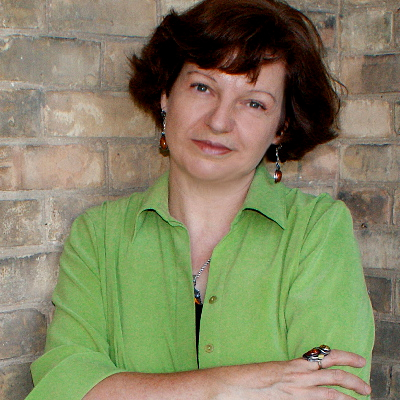
 Deborah Cooke: Author
4 responses to “More on “Gentle Reads””
Ergh, those sounds like wall-bangers.
No thanks. I’ll pass on these gentle reads and go dust off my Agatha’s, my Ngaio’s and other cozy reads from my past.
At least I didn’t feel like letting the dog have the book for a chew toy.
Thanks for the update on that kind of book. Saves me some money and irritation. 😉
LikeLike
I have to say that I absolutely love how you can put in a nutshell everything that bothers me in a book, too, but that I can’t quite explain.
I’m writing (or, let’s say, I’m trying to write) my first novel at the moment and I’m very happy that it has never occured to me to write anything like the things you listed.
Keep on writing such funny and wise comments!:)
LikeLike
I don’t think I’m one much for “gentle reads” either, not the way you describe them.
Though with flashbacks, as with any writing technique, if used skillfully, they can add to a story (IMO). And I’m not saying that just because I occasionally employ them. Unfortunately, as you say, they are often used as graceless info dumps that slow the pace and jar the reader, by writers who have yet to master the technique.
Just my .02 🙂
LikeLike
I agree with you!
LikeLike