I can’t give you an attribution for “skeery bits”. A reader used it in a chat I attended a year or two ago, as in “I’m reading Book X more slowly, even though it’s really good, because I’ve gotten to the skeery bits.” I love that expression, even though I forget who said it, and it’s moved into our household vocabulary.
I’ve been thinking lately about skeery bits in books. A long time ago (maybe not even here) I talked about the history of romance novels and about the use of historical settings to explore new ideas, particularly ideas about women’s sexuality and women’s agency. The use of a different setting made it safe to discuss comparatively radical ideas (like women enjoying sex and admitting as much) as if by changing the setting, we were talking about people other than ourselves. Of course, popular culture and popular ideas are moving targets and as the 1970’s ended, it was less skeery to acknowledge that women had desire, for example, or that women should have a role in determining their own fate.
And the historical romance – which has always been associated with women’s concerns – changed in response to the change in popular perceptions. In the 80’s and 90’s, more historical romance heroines worked through the issues of past relationships and blended families and late pregnancies and infertility and new beginnings. Although they tended to be widowed rather than divorced, depending on the historical period, their concerns echoed our own. How does a woman manage everything? How does she help everyone get along? How does she negotiate her loyalties and allocate her time, giving enough to everyone else and still taking care of herself? What was her identity if she didn’t conceive? The juggling act of the SuperMom with a career was explored in alternate settings, as we tried to make sense of our own realities.
Markets are fluid. Popular perceptions change. And in the last couple of years there have been a lot of changes in the historical romance market. I have a whole bunch of theories about what happened, what is happening and some ideas of how it can be addressed, but a lot of this isn’t up to me. Or even us, as authors and readers. It’s up to publishers to try new things and to try them with enough enthusiasm that they don’t just sink without a ripple in a crowded marketplace.
But the big idea I had the other day was with regards to something I could do.
You see, a year ago or so, I wrote a proposal for a trilogy of historical romances, which I liked a lot. It was edgey and romantic and sexy and filled with historical tidbits. The characters fascinated me; the structure was innovative and yet I knew intuitively that it was right. I loved the balance of light and dark. The few editors who saw this weren’t similarly charmed – I decided I had missed the mark (it happens) and chucked the proposal into the file.
But I really like it. It haunts me. Last week, I dug it out and read it again.
And it occurred to me what the issue with it might be. What if we don’t need the historical setting to explore the skeery bits anymore? What if the role of the historical setting in our current market has changed? What if historical settings are now working successfully in romance for nostalgia or fantasy?
You have only to take the most fleeting of glances at the lists to see that there are two niches doing remarkably well in terms of historical settings: inspirational romances and erotic romance. What if the appeal of inspirational romance in an historic setting is both the Christian message and the nostalgia for a different time, maybe a time when people were more principled and the world less complicated? (Westerns are big in this niche, and I think of the appeal of westerns being the moral black and white of the setting and the issues.) What if the appeal of the erotic romance in an historical setting is both the sexual adventure and the fantasy of a time in which STD’s (especially the big kahuna HIV) were less of a concern? (Did you ever truly imagine that there were so many private S&M and/or sex clubs hidden away at Regency manors? No. I doubt that the historical record will support the idea either, but it’s a popular one in erotic romance.)
What if we can now explore the skeery bits in contemporary settings?
A quick glance over the market listings from RWA showed a remarkable number of editors looking for “big, juicy contemporaries”. Sounds like they have skeery bits, doesn’t it? Sounds like the line between literary fiction, mainstream fiction and big contemporary romance is eroding even further.
I thought about this for a few days, then pulled out that proposal again. I’ve reset it, here and now, with three friends instead of three sisters. I’ve made it a Claire Cross series and I’m having a fabulous time with the first book. It’s flowing out of my fingertips, I’m loving the dialogue, and it’s just so damn perfect that I don’t want to stop.
So, speak to me of historicals and contemporaries. Where do you put up with skeery bits? Where do you want pure fantasy? Or are the two muddled up together for you?

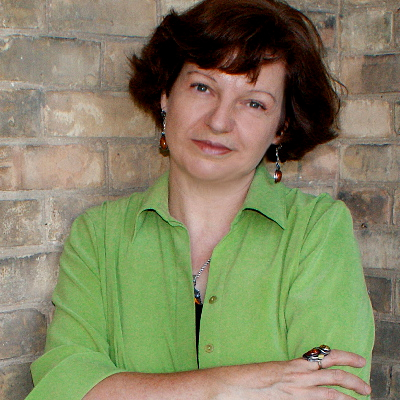
 Deborah Cooke: Author
2 responses to “Skeery Bits”
When I read my most recent RWR the 2006 numbers showed Historicals in second, Paranormals in third, which led me to believe the historical market may be coming back (in terms of sales).
Thinking back to the (newly published) historicals I’ve read this year, they aren’t much different than the contemporaries. Serial murder, stalking, child and spousal abuse can be found there as readily as in Romantic Suspense, but the story lines are further complicated by the time period’s method of dealing with such things. It was harder in previous historical periods for a heroine to find help. That feeling of being (almost) alone against (almost) insurmountable obstacles heightens the skeery bits for me, while still having the (false) buffer of it taking place so far in the past.
Sometimes when I read I crave that sense of removal. There are days I don’t want to read, or, more accurately, cannot handle reading about child prostitution, domestic violence or serial killers in today’s culture for escapism. It hits far too close to home(I lost a dear friend when her husband set fire to their home,) but I can handle it in a story set in Regency or Victorian England. I am caught up in it while reading, but when the book is done it has less power to haunt.
I look forward to your new series, whenever it is set!
LikeLike
Interesting, Diana. I have read contemporaries with lots of skeery bits, but they were all series titles. Certain authors, like Judith Arnold, tackled some meaty issues in their HS titles, in a time when single title contemporaries were more light. I’ve heard authors talk about the freedom they had with lines like SuperRomance in the early 90’s – maybe that was Barbara Samuel??? – so that ties together. It’s interesting to me how things keep changing, isn’t it?
c
LikeLike